Grand Planetary Court
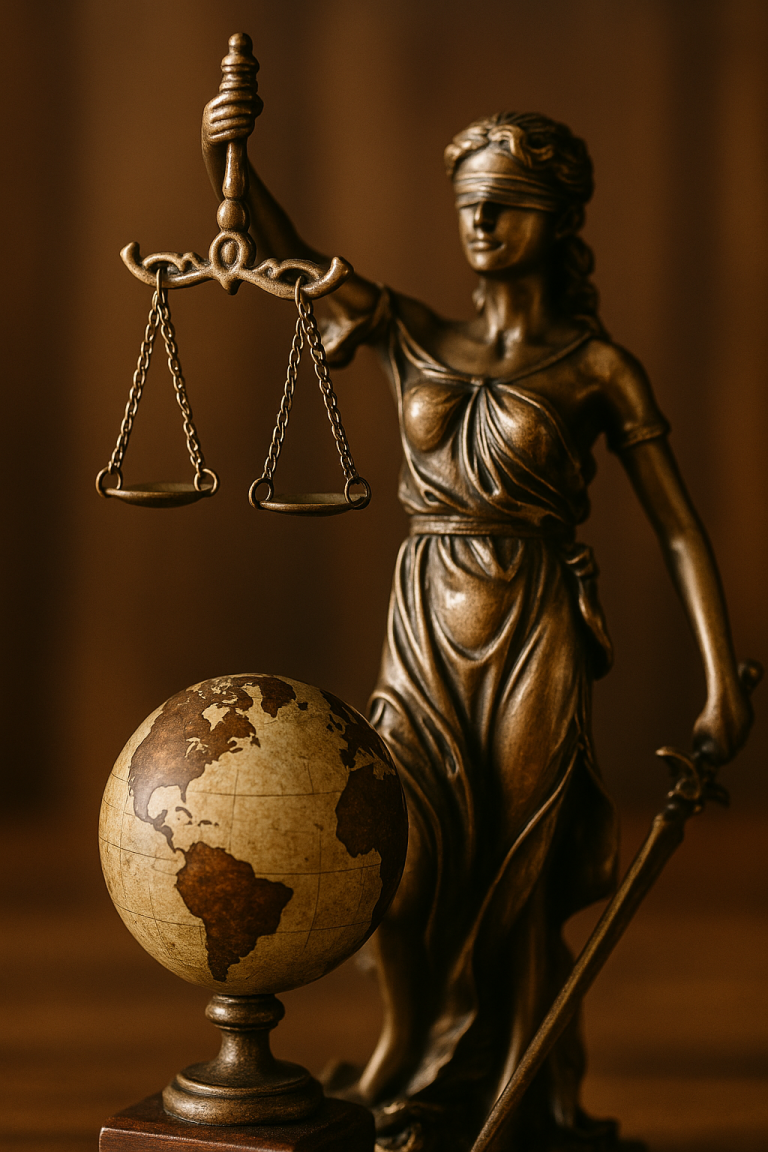
The ‘Grand Planetary Court’ is the planet’s highest judicial authority and administers justice on behalf of all humanity. It forms the central pillar of global justice within the system.
The existing International Criminal Court can be further developed, expanded and integrated into the structure of the ‘Grand Planetary Court’, building on and expanding existing institutional experience and mechanisms.
The Court consists of a total of 31 judges, divided into three chambers and a presidency. All members must be qualified to hold judicial office and are nominated by the nations through a regulated application process.
Each nation may propose one suitable candidate per legislative term, provided that the candidate successfully passes the selection process. The composition of the Court takes into account a balanced gender distribution as well as professional suitability.
In addition, there is a Presidency, which is structured as an independent position and is responsible for the management of the Court. In the event of a tied vote within the Court, the Presidency has the casting vote to bring about a binding decision.
The structure of the court is not designed to pit groups against one another, but to ensure equality, balance and professional quality.
The individual chambers are organised by subject area and deal with different areas of law, in particular:
- Economics and finance,
- Criminal law and international law,
- Environmental law, as well as other relevant global issues.
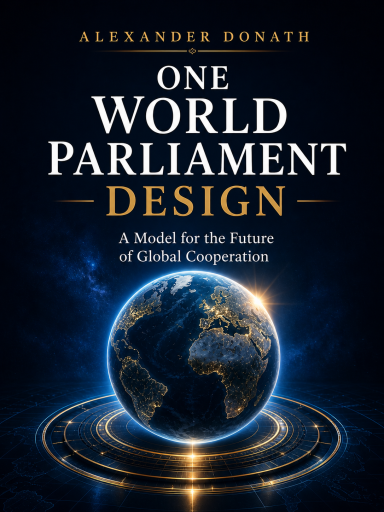
Book: One World Parliament Design by Alexander Donath
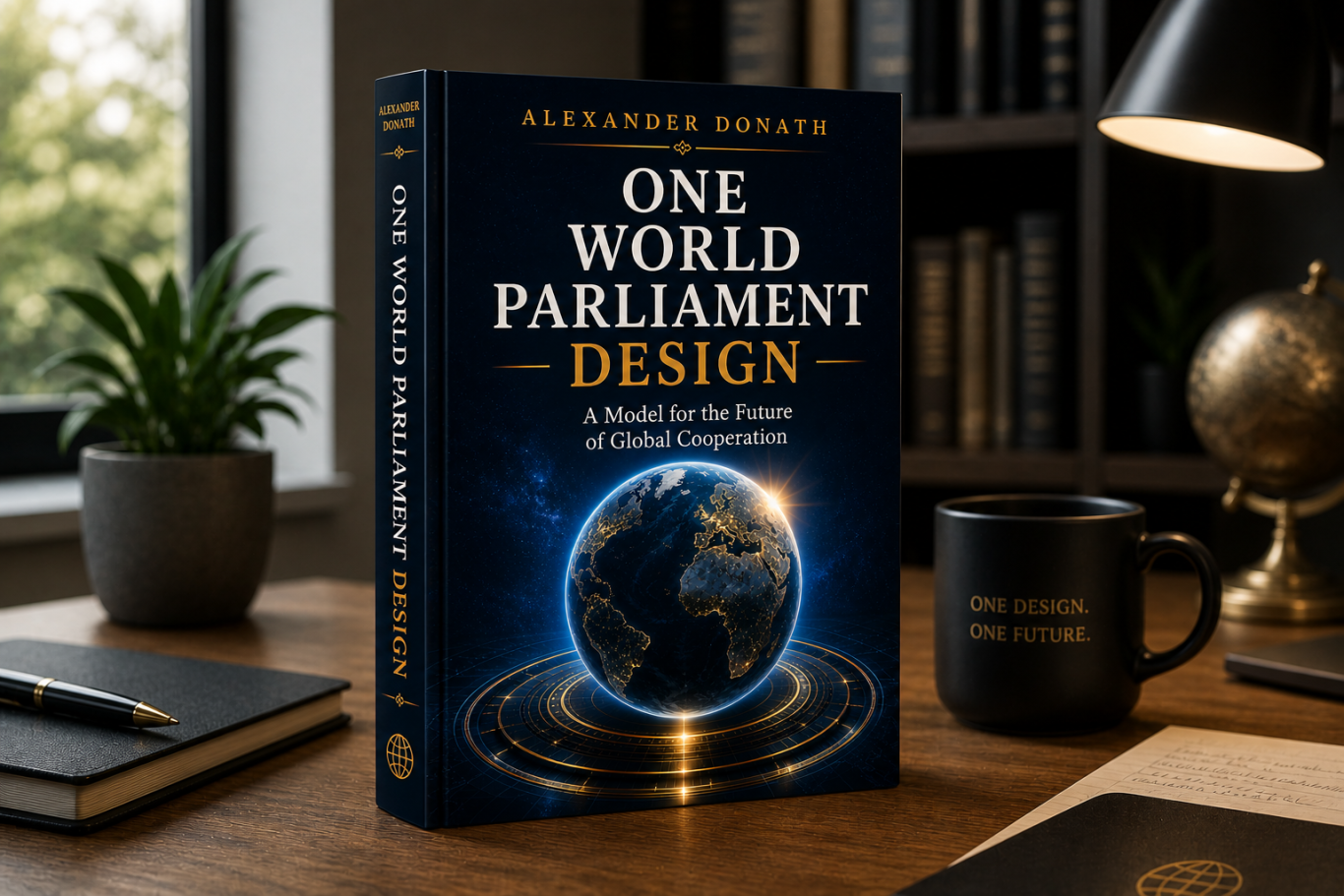
What might a functioning global order look like?
“One World Parliament Design” develops a comprehensive model for a new form of international cooperation. In a world where global challenges increasingly transcend national borders, this book poses the central question: Are existing systems still sufficient – or is a new level of coordination required?
This work combines analysis, system design and future perspectives into a structured overall concept. At its heart is a World Parliament as a complementary, democratically legitimised body that steps in where today’s structures reach their limits.
Now available on Amazon and as a download pdf.