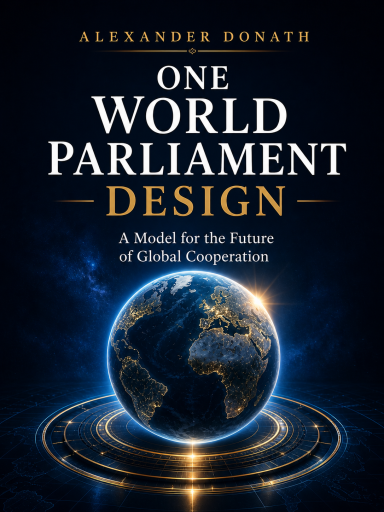
One World Parliament Design
by Alexander Donath
A model for a democratic world parliament: citizens vote directly, whilst states retain equal representation. A hybrid multi-chamber system that makes global democracy a practical reality – moving step by step from consultation to decision-making.
It combines representation of the people, the logic of statehood and social diversity within a clear structure. It is modular in design, inclusive in nature and compatible with existing systems such as the United Nations.
A brief summary of the World Parliament
The power structure and parliamentary organisation in Alexander Donath’s concept of ‘One World Parliament Design’ are based on a well-thought-out model. It is a multi-tiered, symbolic and highly codified system aimed at establishing a democratic, planetary order.
Power Structure Overview – The power structure consists of four key institutions (3+1 system):
1. World Parliament (“Solar System Parliament”)
2. World Youth Parliament (“The Moon”)
3. “Planetary Leadership” (PL)
4. “Grand Planetary Court”
Together, these four bodies form the political backbone of planetary civilisation and are organised hierarchically yet cooperatively. Decisions are made on the basis of an inclusive, respectful approach, in accordance with the principle of ‘one person equals one person’.
Structure of the World Parliament
General Assembly
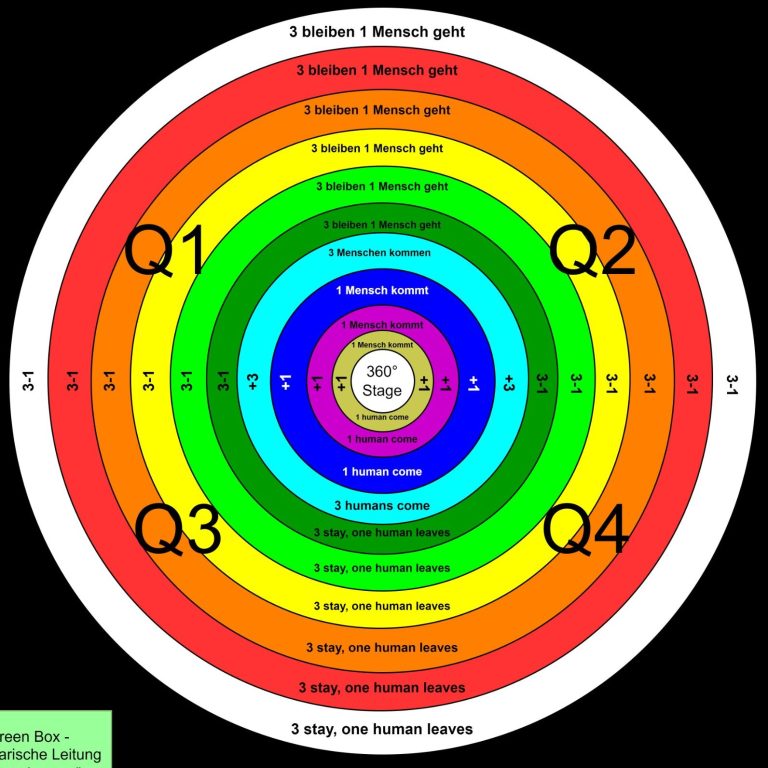
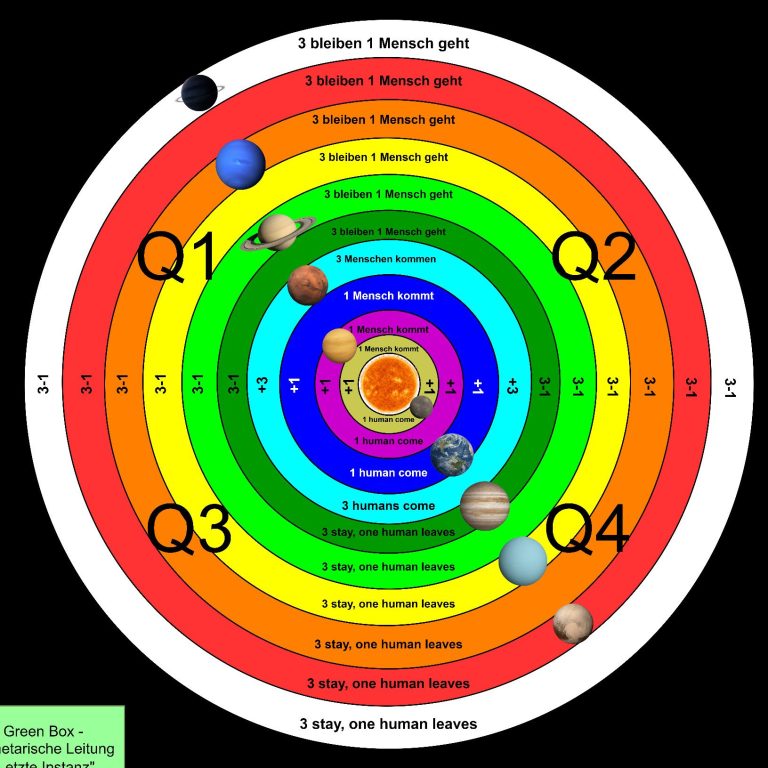
General: A circular 360° design inspired by the solar system. Colour coding and planetary associations with the Sun, planets and symbolic social groups are incorporated into a functional model. Parliament is organised into quarters (Q1–Q4) – these represent age groups and cycles of time.
Multi-chamber system (‘3+1 system’):
1. ‘Small Evolution Parliament’ (Special Committee on Education, Science, Finance and the Economy)
2. Council of Nations (Chamber of Nations)
3. ‘The Small Nature, Animal and Water Parliament’
4. Council of Elders
Seat allocation and vote weighting: Demographically based (e.g. by age group, gender, disability, parental status). Seats are allocated according to a specific allocation matrix of 1 vote per seat, optionally with or without a population multiplier, to ensure a balance between large and small nations. Allocation to the chambers is based on the 3+1 transfer principle: 3 quarters remain, 1 moves to a chamber.
Optional sizes of the World Parliament:
- Full capacity with 4,680 seats (24 seats per nation);
- three-quarters capacity with 3,510 seats (18 seats per nation);
- Half capacity with 2,340 seats (12 seats per nation);
- one-quarter capacity with 1,170 seats (6 seats per nation)
- or continental representation with 144 seats (24 seats per continent).
Key features: “Planetary Leadership” (PL) acts as the executive body with symbolic decision-making authority (“Golden Trowel”). Special musical instruments in the parliament (“Sun” and “Moon”) serve as symbols of harmony, music and representation. World Youth Parliament (“The Moon”) with its own structure and voting rights.
It would be possible to integrate this into existing UN structures, and through reforms, the World Parliament could thus be gradually established in the medium term.
Design Made in Germany, Berlin 2024
Making use of existing United Nations structures
Reforming the UN (United Nations) would allow the General Assembly and the various committees to be organised along the lines of Donath’s model. This would make it possible to draw on existing, well-established structures.
Why a world parliament?
Humanity stands at a historic turning point. Our technological capabilities are advancing faster than our political structures. Whilst capital, data, environmental pollution, pandemics, migration, artificial intelligence and military technologies have long since become global phenomena, the world’s political order remains predominantly organised along national lines. This is precisely where one of the greatest risks of the 21st century lies. Global problems are coming up against fragmented decision-making structures. A world parliament would therefore not be a symbol of romantic utopia, but a logical progression of international cooperation.
Climate change, species extinction, water scarcity and ocean pollution already demonstrate today that national borders cannot halt planetary crises. When major rivers are poisoned, forests disappear or seas are overfished, this affects the whole of humanity in the long term. Yet to this day, there is no democratically legitimate global institution capable of acting in the binding interests of all people. A world parliament could, for the first time, create a political level that represents not just states, but humanity itself. It would develop global protection standards for nature, the atmosphere, water and resources, and safeguard long-term interests against short-term national power politics.
The question of global jurisdiction is also becoming increasingly significant. Although international courts already exist, their enforcement power is limited and often dependent on the political will of individual states. Crimes against humanity, global corruption, digital manipulation or the exploitation of international spaces require a stronger planetary legal order in the long term. A world parliament could create the democratic foundation upon which global laws and independent world courts are legitimised. Without common rules, the future risks being dominated by power interests, economic competition and geopolitical conflicts.
This challenge is particularly evident in space. The Moon, asteroids and near-Earth orbit are increasingly becoming areas of economic and strategic interest. Individual states and corporations are already preparing to access raw materials and infrastructure in space. Without international democratic oversight, space could become a new colonial race – this time beyond Earth. A world parliament could establish rules for the peaceful use of space, clarify ownership issues and prevent a handful of actors from monopolising the resources of the cosmos.
The question of peace remains equally central. History shows that lasting peace rarely arises through deterrence alone, but rather through institutions, dialogue and mutual political engagement. A democratically legitimised world parliament could defuse conflicts, formulate common security interests and reinforce the idea that people from different nations bear political responsibility for one another. Peace would then no longer be merely a diplomatic state of affairs between states, but a shared planetary project.
Even scenarios that still seem futuristic today but may well be reality tomorrow highlight the need for global institutions. Should humanity one day encounter extraterrestrial life or trade with non-human civilisations, the question would be unavoidable: Who speaks for Earth? Individual nations? Military alliances? Corporations? Or humanity as a whole? A world parliament could form a legitimate planetary voice that represents not national interests, but the common interest of the Earth.
Ultimately, this is also about a new consciousness. The people of the 21st century no longer live merely within a single nation, but on a vulnerable planet within a shared sphere of destiny. The concept of the ‘planetary human’ does not mean the abolition of cultural diversity or national identity. It means the realisation that a shared responsibility exists across all borders. A world parliament would be an expression of this consciousness: the political recognition that humanity has learnt to see itself as a shared civilisation.
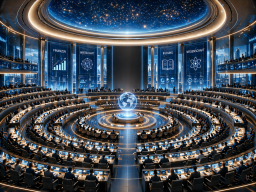
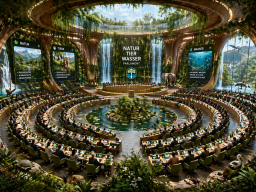
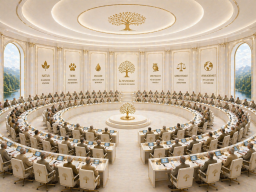
Structure of the World Parliament Model
"One World Parliament Design: A Model for the Future of Global Cooperation" by Alexander Donath
The hybrid, pluralistic world parliamentary system is an institutional framework for global democracy that brings together multiple forms of political legitimacy within an integrated structure. It combines a directly elected Chamber of World Citizens (also known as the Plenary Assembly) with a federal multi-chamber system in which states and regions are represented on an equal footing, and whose members may be selected either democratically or by lot. The aim is to take account of the principle of demographic equality as well as state sovereignty and deliberative participation. This combination creates a pluralistic approach to representation that structurally reflects different social groups, generations and areas of interest through quotas, enabling balanced decision-making at a global level.
Structure of the Solar System Parliament (World Parliament)
4 Quarter
Broken down by age group to ensure fair representation of all people.
3+1 Chamber
Council of Nations, "Small Nature, Animal and Water Parliament", "Small Evolution Parliament" and the Council of Elders.
Solar System
The individual circles in the parliament are linked to the planets of our solar system, from the innermost to the outermost: Mercury, Venus, Earth, Mars, Jupiter, Saturn, Uranus, Neptune, the dwarf planet Pluto and the as yet unknown Planet X. The stage symbolises the centre of our Sun, which is honoured and represented by a special musical instrument called ‘The Sun’.

3+1 rule
3 people remain in their allocated (quota) group and 1 person moves to one of the chambers.
Circles (rows of seats)
The Parliament is divided into 10 coloured constituencies, 6 of which are allocated to specific quotas and 4 of which represent the individual chambers.
Functional model
In a functional model, the World Parliament is assigned to several levels of process.
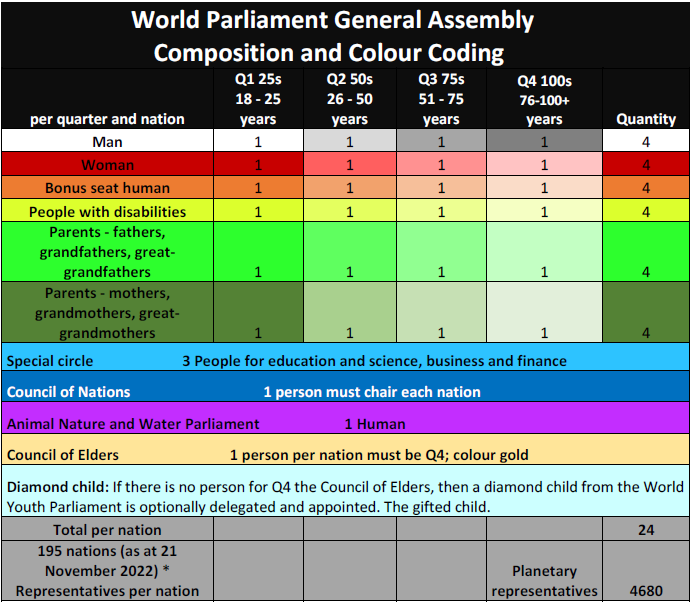
Composition and colour coding in the plenary session
The table describes the composition of the Assembly of the World Parliament and uses colour coding for different groups.
Key points:
- Representatives are appointed per quarter (age group) and nation according to gender, age and special criteria:
- Men (white) and women (red): 1 person per age group
- Human bonus seat (orange): 1 per age group
- People with disabilities (yellow): 1 per age group
- Paternal parents (light green) and maternal parents (dark green): 1 per age group
- Age groups (quarterly sections):
- Q1: 18–25 years
- Q2: 26–50 years
- Q3: 51–75 years
- Q4: 76–100+ years
- Special circle "Small Evolution Parliament" (light blue): 3 people from education, science, business, finance
- Council of Nations (blue): 1 person in the chair per nation, national chamber
- Continent/ "The Small Animal, Nature and Water Parliament" (violet): 1 person
- Council of Elders (Gold): 1 person per nation from Q4
- Diamond child (The gift child)(turquoise): Replacement for missing Q4 member of the Council of Elders, from the World Youth Parliament
- With 195 nations = Total:
- 4,680 planetary representations in the largest variant (24 seats per nation)
- 3510 planetary representations with 3-quarter occupancy (18 seats per nation)
- 2340 planetary representations at half occupancy (12 seats per nation)
- 1170 planetary representations with 1-quarter occupancy (6 seats per nation)
144 planetary representations with continental representation variant with equal quota representation and 24 seats per continent
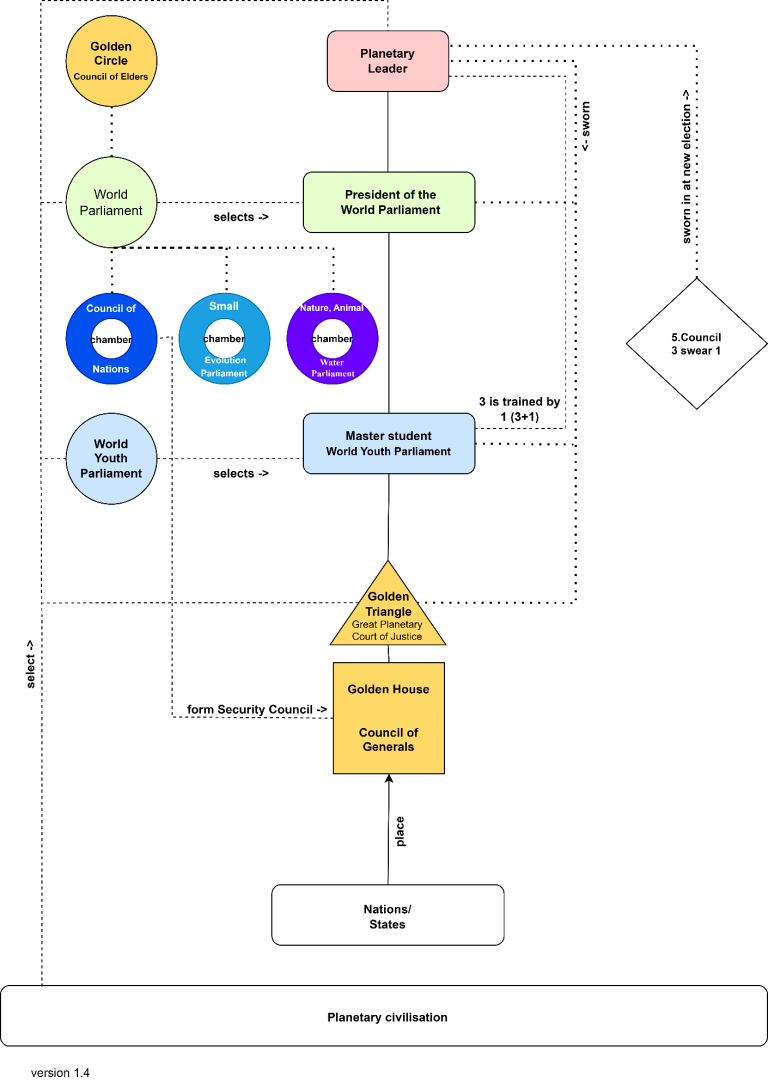
Overview of the Power Structure
The diagram illustrates a hierarchical and interconnected power structure for a ‘World Parliament’ and a ‘World Youth Parliament’.
Structure and relationships:
Planetary civilisation (lowest level)
→ forms the basis from which nations and states emerge.
Nations/States
→ appoint members to the Council of Generals in the Golden House.
→ The Golden House is situated below the Golden Triangle / "Great Planetary Court".
World Youth Parliament
→ elects a master student as chair of the parliament, and the parliament selects the gifted child from each nation.
→ this master student participates in the higher decision-making system.
→ is sworn in by the Planetary Leadership.
World Parliament
→ The General Assembly elects the President of the World Parliament and the Planetary Leadership.
→ Is sworn in by the Planetary Leadership.
→ Consists of the General Assembly and three chambers:
- Council of Nations (blue)
- Special Committee / "Small Evolutionary Parliament" (light blue)
- "Nature, Animal and Water Parliament" (purple)
President of the World Parliament, Master Student of the World Youth Parliament and Chair of the Grand Planetary Court
→ is sworn in by the Planetary Leadership (PL).
→ serves on the 5th Council, which consists of three members, and swears in the Planetary Leadership.
Golden Circle (Council of Elders)
→ is situated above the World Parliament and acts in an advisory and supervisory capacity.
Security Council
→ is composed of members of the Council of Nations and elected generals.
In summary:
There is an interlinked dual structure: an official World Parliament with a president, chambers and a Council of Elders, and a World Youth Parliament with a training function. Security and judicial bodies (Golden Triangle, Golden House) operate across both structures and are directly linked to national structures.
1. Optional voting procedure: based on the traditional democratic principle
In addition to the matrix-based selection process, nations have the option of using a traditional democratic majority voting system instead. The decision as to which procedure is used is made democratically in advance, evaluated and then implemented in a binding manner. This allows nations a certain degree of flexibility within the overall system.
The fundamental 3+1 rule of the quarters continues to apply in this variant as well. This means that from each of the four Quarter structures within a circle, one representative is transferred to the inner circles or chambers, whilst three representatives remain in the outer structure. This principle ensures that the mix between the plenary assembly and the inner bodies is maintained and that every demographic quota gains access to the central decision-making forums.
In this variant, seats are allocated exclusively according to the classic majority principle. There is no supplementary lottery and no associated refinancing mechanism. Instead, the available seats are allocated in a clear order: the number of votes is decisive, with candidates being considered in chronological descending order based on their election results.
The decisive factor here is the position for which a person has applied. An application may, for example, relate exclusively to a specific constituency, such as the men’s constituency (white constituency), or to a role within the multi-chamber system, such as a seat on the Council of Nations (a combination of the white and blue constituencies).
In the case of multiple applications or applications for specific chambers, the respective seat is awarded to the person who received the most votes within that category. Upon the allocation of a mandate, the corresponding place in the respective constituency and quarter is definitively filled and blocked for further allocations.
The so-called priority circles are also filled first in this variant. This means that certain places within the respective quarters are allocated early on and are thus blocked for subsequent selection processes. This procedure ensures that central functions within the system are secured first.
The consistent application of the 3+1 rule is essential here. It ensures that at least one representative from each structural unit moves up into the inner circles and participates in the decision-making processes there. In this way, it is ensured that all social groups and quotas are not only formally represented, but also actively involved in the central parliamentary processes.
2. Optional selection procedure using the quarter selection matrix
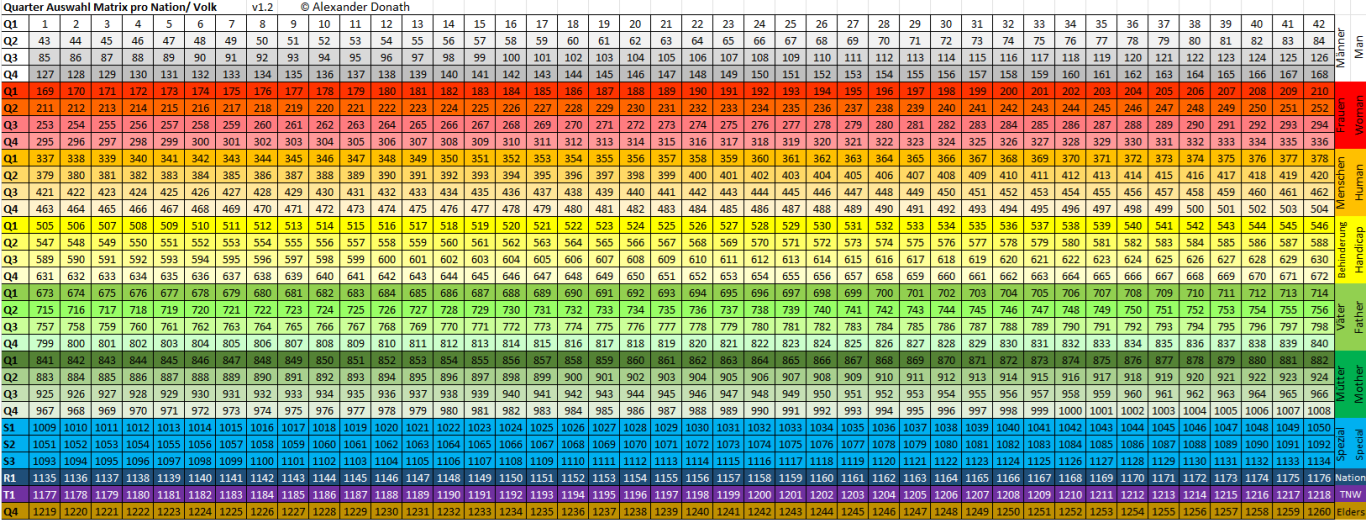
The so-called ‘Quarter Selection Matrix’ forms the basis for the lottery and selection process in the World Parliament. It clearly and transparently defines all possible seats that are taken into account when allocating mandates. Each seat is unique, numbered in ascending order, and unambiguously assigned to a specific colour-coded circle within the World Parliament.
The circles follow a fixed order based on both the functional structure of the Parliament and the composition of planetary representation. In ascending order, these are: men (white), women (red), the general human circle (orange), people with disabilities (yellow), fathers (light green), mothers (dark green), the subject-specific priority circle for education, science, economics and finance (light blue), Council of Nations (blue), Nature, Animal and Water Parliament (violet) and the Council of Elders (gold).
Each of these groups is divided into four so-called quarters. These quarters represent different stages of life within society and ensure a generational distribution of seats. Within each group, there are 42 potential candidates for a seat per quarter. This results in a total of 168 potential candidates per circle (42 candidates × 4 quarters), which are distributed across four actual seats.
The priority circles – in particular the Council of Elders and subject-specific circles – are treated separately in the selection process and drawn first. In total, the matrix comprises 1,260 potential candidate slots per nation, from which the final mandate holders are selected.
The actual allocation of seats takes place in several stages. First, all candidates who have achieved at least 5% of the votes within their nation in a preliminary election are considered. Seats are then allocated in descending order of votes received, starting with the strongest candidates.
A special feature applies to the orange and yellow constituencies. These two constituencies are deliberately gender-neutral and are open to everyone. Seats are allocated here solely on the basis of the number of votes received, regardless of gender. This deliberately loosens the rigid gender quota and enables a dynamic balance between the genders.
For the yellow constituency, there is also a clear eligibility requirement: candidates must provide evidence of a recognised disability, as this constituency serves exclusively to represent people with disabilities and to advocate for their interests at a planetary level.
The Council of Elders occupies a special position in the selection process. As a priority circle, it is drawn before all other circles. This may result in certain quarters being filled or ‘blocked’ in advance. This element, known as the ‘Fortuna principle’, deliberately introduces an element of chance into the system. The aim is to emphasise the special significance of a mandate whilst also making it clear that, alongside merit and election, chance can also play a role in the selection process.
The draw itself is conducted using uniquely numbered, colour-coded balls, each representing a specific seat in Parliament. This procedure ensures transparency, traceability and equal treatment within the selection process.
As a simplified version of the system, the priority circles can be omitted. In this case, only the six outer circles are responsible for filling the inner structures in accordance with the so-called 3+1 rule. Under this arrangement, three elected representatives remain at the outer level, whilst one representative moves up to the inner circles or chambers. This model reduces complexity whilst retaining the fundamental operational logic of the system.
3. Optional election procedure: list drawn up by the national parliament
For nations where democratic elections are not possible or are deliberately not held, there is the alternative option of allocating seats directly via national lists. This procedure serves as a pragmatic interim solution to enable participation in the World Parliament even under non-democratic conditions.
In this model, seats are not allocated through elections or a lottery, but via pre-determined lists submitted by the respective national structures. These lists must take into account the prescribed structures of the World Parliament. This means that the allocation follows the defined quarters (Q1–Q4) as well as the respective colour-coded constituencies. This ensures that the fundamental system architecture is maintained in this variant as well.
The allocation of seats by lottery is not provided for in this model. Allocation takes place exclusively on the basis of the submitted lists, meaning that the selection is determined entirely by the respective national authorities.
This procedure expressly does not constitute a democratic election in the traditional sense, but rather represents a functional exception within the system. It is therefore to be classified as a non-democratic procedure and is open exclusively to those nations in which no democratic electoral processes are in place. This procedure is not intended for nations with functioning democratic structures.
Voting weighting in Parliament
Option 1: Equal voting weight (1=1) in the World Parliament
The first method of vote weighting in the World Parliament follows a deliberately simple and transparent principle: one vote equals one vote (1=1). This model is based on the fundamental idea that ‘every person is equal’ and focuses on the formal equality of all parliamentary delegations.
In practice, this means that every planetary representative has an equal voting right, regardless of the size or population of their nation. As a total of 24 seats are allocated per nation in the General Assembly, each nation consequently has 24 equally weighted votes at its disposal, which can be cast in votes. There is no additional weighting or adjustment based on demographic factors.
The key advantage of this system lies in its clarity and fairness at the state level. Every nation is treated equally regardless of its size, thereby protecting smaller states in particular from structural disadvantage. This principle strengthens equality within the international system and can help to foster trust and acceptance among all participating nations. It prevents individual large states from exerting a dominant influence on decisions due to their population size, thereby ensuring a balanced distribution of power at the formal level.
Furthermore, this model is particularly transparent and easy to understand. Votes are clearly traceable, as each vote has the same value and no complex calculations or weighting mechanisms are required. This not only facilitates its use in day-to-day parliamentary proceedings but also enhances transparency for the public.
At the same time, however, this variant also presents structural challenges. The main disadvantage is that a nation’s actual population size is not taken into account in the distribution of votes. Large nations with a high population have the same number of votes as smaller nations with significantly fewer inhabitants. This can lead to a discrepancy between the population represented and the actual voting weight.
Consequently, this may lead to a perception that larger nations are under-represented, whilst smaller nations exert a disproportionately large influence in relative terms. In certain scenarios, this could even result in a majority of votes being formed by a large number of smaller nations, even though together they represent only a small proportion of the world’s population.
This tension between state equality and population-based representation is a fundamental feature of this model. Variant 1 deliberately prioritises the equality of nations and accepts potential imbalances in population representation.
Overall, it is a stable, easily understandable and politically well-defined model that aims in particular at balance, equality and the protection of smaller nations, whilst at the same time presenting the challenge of adequately representing large populations.
The version of vote weighting presented here, based on the ‘1=1’ principle, deliberately prioritises the formal equality of nations, thereby creating a stable and easily understandable foundation for parliamentary decisions. At the same time, however, it becomes clear that this model reflects actual population ratios only to a limited extent and may, in particular, restrict the representation of large nations.
To resolve this tension between state equality and population-based representation, a second variant of vote weighting is considered below. This is based on a national population multiplier and allows for a more nuanced representation of the global population structure within the General Assembly.
This raises a key question: how can population size be taken into account appropriately without individual nations assuming a dominant position? To answer this question, two fundamental calculation approaches are compared: linear vote weighting, which reflects population size in direct proportion, and degressive vote weighting, which deliberately weakens the influence of large nations and protects smaller ones.
The following Variant 2 examines these approaches in detail and demonstrates how a balance between representation, fairness and political stability can be achieved within the World Parliament.
Option 2: Vote weighting using a population multiplier (linear vs. degressive)
The weighting of votes using national population multipliers represents an extension of the purely seat-based representation in the World Parliament. The number of planetary seats remains unchanged: in the largest version, each nation has 24 fixed seats in the General Assembly, regardless of its population size. The differentiation occurs exclusively at the level of voting, whereby the votes cast are weighted by a population-dependent multiplier.
The aim of this approach is to incorporate demographic reality into decision-making without sacrificing the structural equality of states within the parliament. Whilst all nations are formally equally represented, their population size is reflected in the relative strength of their votes. This creates a hybrid model between state-based equality and population-based representation.
In principle, a mandatory lower limit applies to all variants of vote weighting: the multiplier must not be less than 1. This minimum rule ensures that no state falls below its fixed base weight of 24 votes. Without this limit, states with fewer than 25 million inhabitants would receive a multiplier of less than 1 and thus, despite their 24 seats, would in effect have fewer than 24 weighted votes. This would contradict the principle of equal basic representation.
The linear variant of vote weighting is based on direct proportionality between population and vote weight. It is described by the following formula:
Mₗ = max(1, B / 25)
The weighted votes are calculated as follows:
Sₗ = 24 · Mₗ
Here, ‘B’ denotes a nation’s population in millions, 25 serves as a standardised reference value, and ‘Mₗ’ is the linear multiplier. The calculation is carried out in three steps: first, the population is divided by 25. Next, a check is made to see if the resulting value is less than 1; if so, the multiplier is set to 1. Otherwise, the calculated value is adopted. In the final step, the 24 seats are multiplied by the multiplier, yielding the weighted number of votes.
The linear calculation is characterised by its mathematical simplicity and transparency. At the same time, however, it leads to a high concentration of political power. As the voting weight increases in proportion to population size, populous states are given a significantly higher weight than smaller nations (see table on page 105). This structure can result in individual large states being able to dominate or block decisions, which could impair the functioning of a global parliament.
To mitigate this problem, a degressive form of vote weighting is being introduced. This continues to take population size into account, but reduces the rate at which the vote weight increases. The formula is as follows:
M_d = max(1, √(B / 25))
The weighted votes are calculated in the same way:
S_d = 24 · M_d
The calculation process is essentially the same as the linear variant, but differs in one key step. After dividing the population by 25, the direct value is not used; instead, the square root is taken. Only then is the minimum threshold of 1 applied. As a result, the multiplier grows more slowly as the population increases than in the linear model.
The effect of this degression can be illustrated with an example. A nation with 25 million inhabitants achieves a multiplier of 1 in both models and thus 24 weighted votes. A nation with 425 million inhabitants, on the other hand, receives a multiplier of 17 in the linear model and thus 408 weighted votes. In the degressive model, however, the multiplier is approximately 4.12, resulting in around 99 weighted votes. Population size is thus still taken into account, but to a significantly lesser extent.
The key advantage of degressive vote weighting lies in its balancing function. It combines the principle of demographic representation with the need for political balance between states of different sizes. Large nations retain a higher weighting without, however, achieving structural dominance. Small and medium-sized states are relatively strengthened compared to the linear variant, without their votes being made completely equal.
Conversely, the disadvantage remains that the degressive variant does not establish complete equality either. Differences in voting weight persist, albeit in a reduced form. Furthermore, the calculation is less intuitive than the linear method and requires clear communication.
Overall, it is evident that linear vote weighting consistently reflects population size, albeit in a politically unbalanced manner. The degressive variant, by contrast, represents a functional compromise that takes into account both demographic reality and the need for a stable balance of power. Taking the minimum rule into account, degressive vote weighting therefore appears to be the more suitable basis for a democratically legitimate and, at the same time, functional world parliament.
The World-Bundestag rule
The ‘World Bundestag Rule’ defines the central voting principle of the World Parliament and reconciles two seemingly contradictory requirements: the formal equality of all states and the actual weighting based on population. The starting point is a fixed structure under which each state sends exactly 24 representatives, regardless of its size. However, this equal distribution of seats is supplemented by a crucial mechanism – the degressive population multiplier.
This multiplier determines the voting weight of each individual seat. It is based on a state’s population size, but does not follow a linear proportionality; instead, it follows a deliberately moderated, degressive logic. This means that states with large populations are given greater weight than small ones, though not in proportion to their sheer number of inhabitants. As the population grows, the weight increases more slowly. This prevents individual large states from dominating the parliament, whilst at the same time ensuring that demographic reality continues to be reflected.
Within this system, each of a state’s 24 members of parliament has their own vote, which is weighted by the respective multiplier. There is no consolidation into a single state vote. Instead, all votes are cast individually and then added together globally. The state thus does not act as a unified entity, but as the sum of its individual parliamentary decisions.
A concrete example illustrates how this works: for Germany, with a population of around 84.5 million, this model results in a degressive multiplier of 1.84. Each of the 24 members of parliament therefore has a voting weight of 1.84. Germany’s total potential voting weight is consequently 44.16. Crucially, however, this weight is not deployed as a bloc, but is composed of 24 individual votes.
If a vote takes place, for example with 14 ‘yes’ votes, 8 ‘no’ votes and 2 abstentions within the German delegation, each of these votes is weighted separately and incorporated into the global result. This results in 25.76 weighted ‘yes’ votes, 14.72 ‘no’ votes and 3.68 abstentions. These figures are immediately offset against the votes of all other members of parliament worldwide. Germany thus appears not as a unified political bloc, but as a differentiated, internally visible structure of opinion.
This is precisely where the fundamental difference lies from the so-called ‘World Bundesrat Rule’. Whereas in that model states would act as closed units with a single weighted vote, the World Bundestag Rule is consistently based on the principle of individual parliamentary decision-making. Each vote counts in its own right – only its weight varies. The state functions primarily as an electoral and organisational framework, not as a voting unit.
The strength of this model lies in its high degree of democratic resolution. Political majorities and minorities within a country are not levelled out, but remain visible in the global decision-making process. At the same time, the degressive weighting ensures that power does not result solely from population size, but is balanced between large and small states.
At the same time, this significantly shifts the power structure. National governments lose the ability to control their delegations as a unified bloc. Instead, the individual mandate gains in importance, which increases the political pressure on individual members of parliament. Every vote can – due to its weight – have a direct influence on global decisions.
In summary, the World Bundestag Rule is based on a system of weighted individual votes, in which the degressive population multiplier strikes a balance between the equality of states and the representation of the world’s population. Decisions are made exclusively on the basis of the global total of all weighted ‘yes’ and ‘no’ votes. This makes the World Parliament a genuine parliamentary body at the global level, in which decisions are not made by states acting as blocs, but by elected representatives as individual bearers of political responsibility.
Calculation example: Germany (with a factor of 1.84)
Given:
• Population: approx. 84.5 million
• Seats: 24 (in the ‘world’s largest parliament’ variant)
• Declining population multiplier according to the table: 1.84
1. Voting weight per Member of Parliament
Each individual Member of Parliament has:
• 1 vote × 1.84 = 1.84 weight
2. Germany’s total weight
• 24 × 1.84 = 44.16 total weight
This is crucial: Germany contributes 44.16 weighted votes to the World Parliament – but these are divided amongst 24 individuals.
3. Vote (same scenario as before)
• 14 voted in favour
• 8 voted against
• 2 abstained
4. Weighted tally
• Yes: 14 × 1.84 = 25.76
• No: 8 × 1.84 = 14.72
• Abstention: 2 × 1.84 = 3.68
5. Interpretation in the plenary session
The following figures are now displayed in the World Parliament:
• 25.76% in favour
• 14.72% against
• 3.68% abstentions
These figures are directly included in the global total.
6. A politically decisive effect
Now it gets interesting:
• Germany does not have an overall vote of 44.16, but rather
• a clear internal breakdown
In percentages:
• Yes: ≈ 58.3%
• No: ≈ 33.3%
• Abstentions: ≈ 8.3%
Why a 3+1 chamber system?
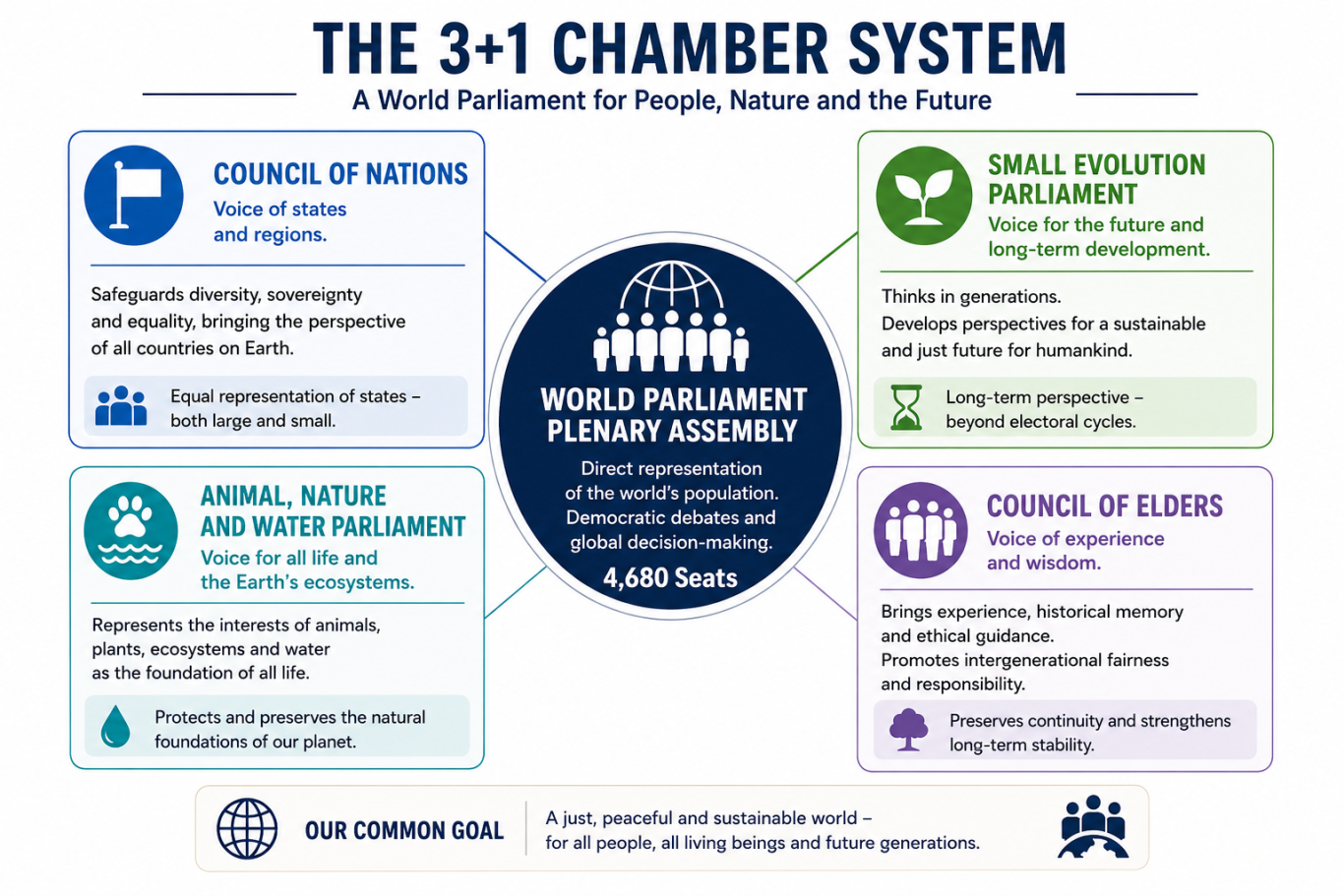
The 3+1-chamber system in the ‘One World Parliament Design’ model aims not only to define global democracy in terms of population size or state representation, but also to give structural visibility to the diverse perspectives of the planetary community. The combination of a plenary assembly and specialised chambers is intended to prevent global politics from becoming one-dimensional or from following exclusively short-term majorities. Particularly at the planetary level, problems often arise because political systems institutionally reflect only a fragment of reality. The model therefore seeks to incorporate different time horizons, ways of life and forms of legitimacy simultaneously.
The General Assembly, or World Parliament, constitutes the primary democratic legitimacy. The largest version comprises 4,680 seats. It represents the direct representation of the world’s population and enables global majority decisions. Without such a General Assembly, a planetary system would quickly appear technocratic or elitist. The General Assembly creates public engagement, political visibility and spaces for global debate. At the same time, it prevents individual states or power blocs from dominating permanently, because the population as a whole is given its own parliamentary voice.
The Council of Nations fulfils a different function. It protects the Earth’s national and cultural diversity. Whilst the General Assembly represents the population more strongly, the Council of Nations ensures that smaller states are not completely outvoted by populous countries. This creates a balance between democratic population logic and state sovereignty. This is particularly important because global institutions could otherwise quickly be perceived as instruments of power for large states. The Council of Nations therefore has a stabilising effect and increases the likelihood that states would be willing to commit to a common planetary system in the first place.
The Small Evolution Parliament expands classical democracy to include a long-term perspective. Modern political systems often react in the short term: election cycles, economic pressure and media dynamics encourage decisions with immediate benefits. As a result, issues concerning the future, such as climate, technological risks, education or intergenerational justice, are often sidelined. The Evolutionary Parliament is designed to address precisely this blind spot. It creates an institutional space for humanity’s long-term development prospects and can thus act as a strategic body for the future. The term ‘evolution’ is used here in a social and civilisational sense rather than a biological one: how does humanity continue to develop sustainably?
The Animal, Nature and Water Parliament is particularly extraordinary. This body is based on the idea that the Earth does not consist solely of human interests. In existing political systems, nature, ecosystems and animals usually enjoy only indirect protection through human interest groups. This often leads to ecological concerns only being taken into account once serious damage has already been done. The Animal, Nature and Water Parliament therefore creates an institutional voice for ecological foundations of life. Both symbolically and practically, it signals that the planetary order is committed not only to humans, but to the entire Earth as a habitat. Particularly in times of global environmental crises, this chamber lends the model an independent ethical depth.
The Council of Elders complements the system with experiential knowledge and historical continuity. Many political systems focus heavily on current majorities and, in doing so, lose sight of long-term social memory. The Council of Elders is not intended to be an authoritarian controlling body, but rather a stabilising organ of reflection. Older generations often possess historical comparative experience, experience of crises and long-term perspectives. At the same time, the Council symbolises respect for lifetime achievement and intergenerational responsibility. This creates a counterbalance to purely short-term or impulsive political dynamics.
The strength of the 3+1-chamber system ultimately lies in the fact that it combines different forms of legitimacy: the population, states, future prospects, ecological interests and life experience. Rather than viewing global politics merely as the administration of power, the model seeks to develop a multidimensional planetary democracy. It is precisely this institutional diversity that distinguishes the model from traditional single-chamber or bicameral systems and gives it its distinctive structure.
Book: One World Parliament Design by Alexander Donath
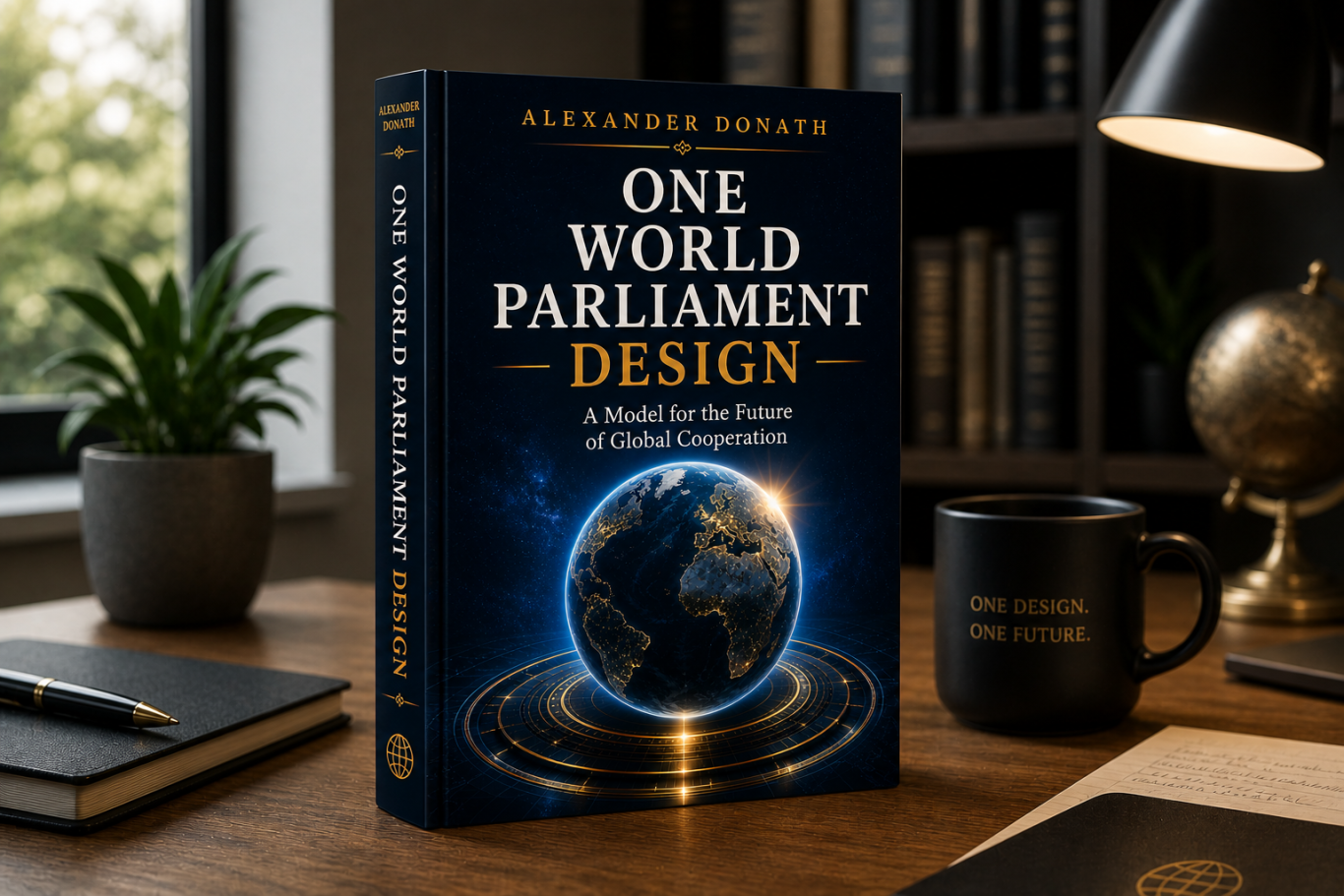
What might a functioning global order look like?
“One World Parliament Design” develops a comprehensive model for a new form of international cooperation. In a world where global challenges increasingly transcend national borders, this book poses the central question: Are existing systems still sufficient – or is a new level of coordination required?
This work combines analysis, system design and future perspectives into a structured overall concept. At its heart is a World Parliament as a complementary, democratically legitimised body that steps in where today’s structures reach their limits.
Now available on Amazon and as a download pdf.